Why “Extract” Without a Strength Tells You Almost Nothing
The short version
A supplement label can print an amount without printing a strength. “Bacopa Monnieri Extract, 200 mg” tells you the weight of material in a serving; it does not tell you how concentrated that material is, and botanical research is done on concentration. Until a label states a standardisation — a percentage of the marker compound — or an extract ratio, the milligram figure cannot be compared to any study.
- An amount is a weight. A strength is a percentage of a named marker compound, or a ratio such as 10:1.
- Two extracts of identical weight can differ enormously in how much active constituent they carry.
- A label that standardises one ingredient and not the others is telling you it knows how — which makes the omissions a fair question rather than an oversight.
Two words that look like the same word
Pick up almost any botanical supplement and the panel will give you a plant name and a number. Bacopa Monnieri Extract, 200 mg. It reads like a complete statement. It is half of one.
The 200 mg is an amount: the weight of extract material in one serving. What it does not tell you is the strength — how much of that weight is the constituent anyone cares about. Two jars of bacopa extract can both honestly print 200 mg and contain very different quantities of bacosides, because “extract” is a process, not a specification. Boil the plant, concentrate it a little, dry it: that is an extract. Concentrate it a great deal and assay the result: also an extract.
This is not a trick anybody is playing. It is a gap in what a label is required to say, and it is the reason two products with identical panels can behave completely differently.
What a strength looks like when a label prints one
There are two conventional ways to state it, and a good label uses one of them.
A marker percentage
The most useful form. The label names a marker compound and the percentage of the extract that is made of it — for example Rhodiola Rosea Extract (3% Salidroside). Now the milligram figure means something, because you can do the arithmetic: 3% of 100 mg is 3 mg of salidroside per serving. That number is comparable to a study. The unmarked version is not.
An extract ratio
The other form, written as 4:1, 10:1 and so on — the weight of raw herb that went in for each unit of extract that came out. It is coarser than a marker percentage, because it says nothing about what survived the process, but it is still a great deal better than nothing.
A label that gives neither has told you the weight of a bag without telling you what is in it.
Why bacopa is the ingredient where this matters most
Of the botanicals that turn up in cognitive supplements, bacopa is the one with the most substantial human evidence for memory specifically, as opposed to alertness, mood or fatigue. That evidence has two consistent features. It is built on standardised extracts — quoted by bacoside content, because that is the class of compound the pharmacology points at. And it accrues over months of daily use rather than over days; bacopa is not an ingredient anybody feels on the first afternoon.
Both features have consequences for how you read a label. If the extract is not standardised, you cannot line the product up against the trials that make bacopa worth having in the first place. And if a page selling you a bacopa product promises fast results, it is promising something the ingredient's own literature does not describe.
Reading a real panel: the MemoFix example
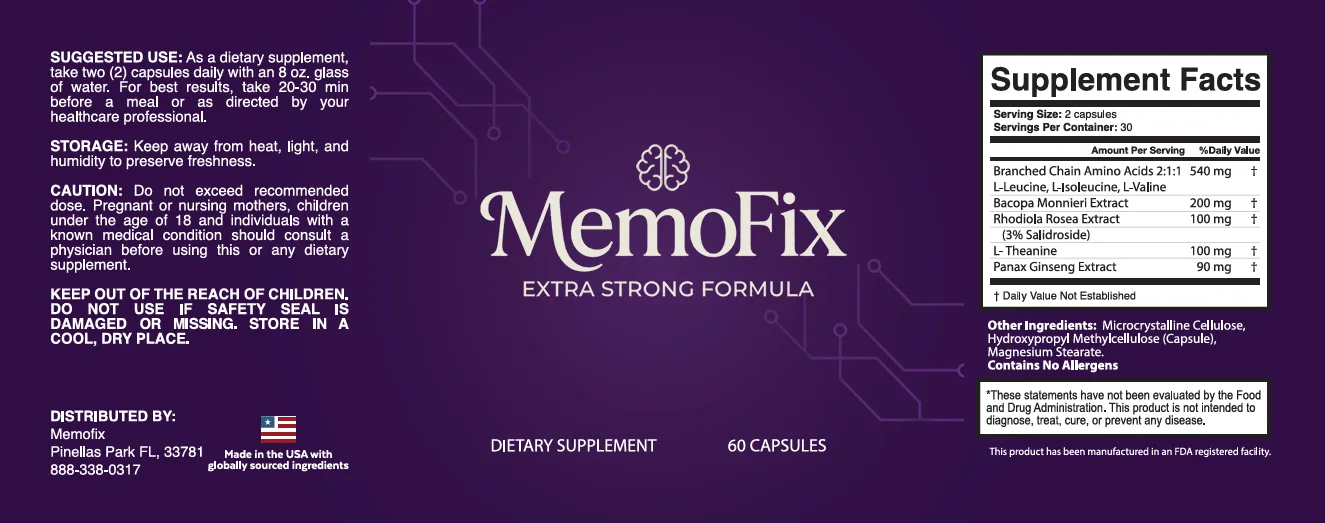
MemoFix is a useful worked example precisely because it is better than average. Its label prints a complete Supplement Facts panel with a milligram figure against every one of its five actives, in heaviest-first order, with no proprietary blend concealing the individual amounts. That already puts it ahead of a large share of the category.
Read the same panel for strengths, though, and it splits in two.
- Rhodiola Rosea Extract, 100 mg — printed as 3% salidroside. Complete: amount and strength.
- L-Theanine, 100 mg — a single defined compound rather than an extract, so there is no standardisation to state. Complete by definition.
- Branched Chain Amino Acids 2:1:1, 540 mg — also defined compounds, and the printed ratio makes the split arithmetic: 270 mg, 135 mg and 135 mg.
- Bacopa Monnieri Extract, 200 mg — amount only.
- Panax Ginseng Extract, 90 mg — amount only.
Three of the five lines are fully specified. Two are not, and one of those two is the ingredient the product's memory positioning depends on. That is not a reason to dismiss the product; it is the reason to send one email before buying six bottles.
The email to send
Two sentences will do it. What is your Bacopa Monnieri Extract standardised to, and what is the extract ratio? Same question for the Panax Ginseng Extract.
A manufacturer knows the answer — it is on the certificate of analysis for the raw material, and a company that printed “3% Salidroside” on the rhodiola line plainly has the information and the habit. So the reply is informative whichever way it goes. A specific answer tells you what you are buying. A vague one tells you something too.
The general rule
When you are comparing two botanical supplements, compare strengths first and amounts second. A smaller amount of a well-characterised extract is a better-understood purchase than a larger amount of an unspecified one — not necessarily a better product, but a purchase you can actually reason about. And when only one of the two labels states a strength at all, you are not really comparing two products. You are comparing one product against a description.
The label this article is about
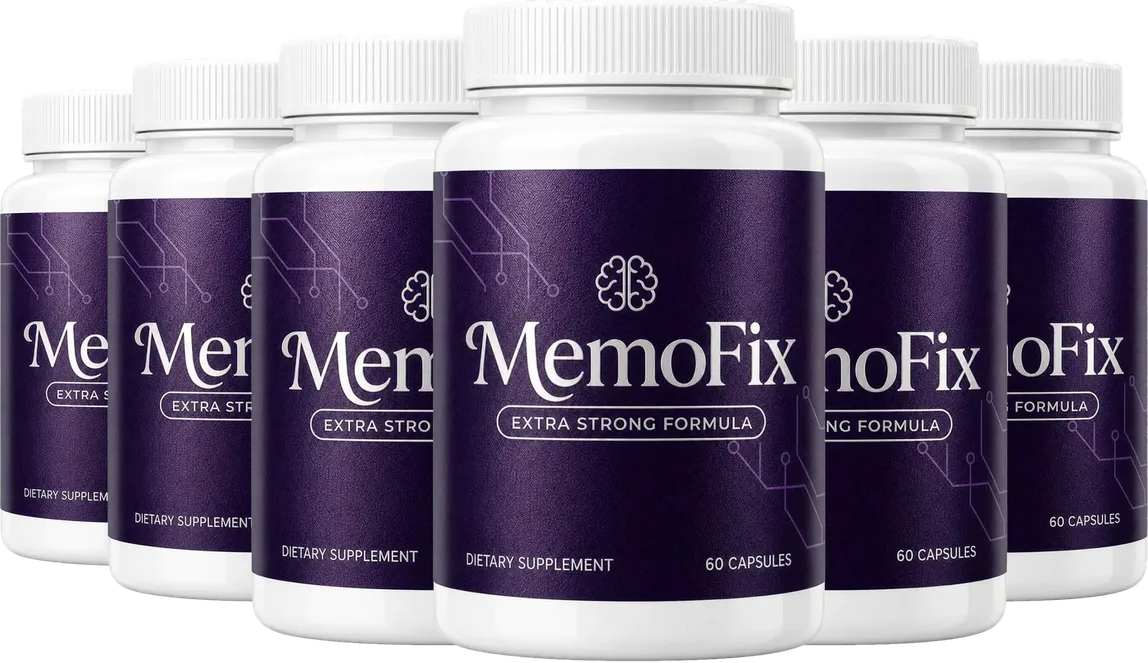
MemoFix prints an amount against all five actives and a standardisation against one. Here is what that is worth.
Order NowFrequently asked questions
What does standardised to 3% salidroside actually mean?
It means 3% of that ingredient's weight is the named marker compound. On a 100 mg rhodiola line that is 3 mg of salidroside — arithmetic on two printed figures, which is exactly the calculation a standardisation exists to let you do.
Is an unstandardised extract worthless?
No — it is unverifiable, which is different. It may be an excellent extract. You simply cannot compare it to the research, because the research specifies concentration and the label does not.
What should I ask a seller?
Two questions. What is the extract standardised to, and what is the extract ratio? A manufacturer that prints a standardisation for one ingredient can answer both for the others in a single line.
Is a proprietary blend worse than an unstandardised extract?
Usually yes, because it removes the amount as well as the strength. An unstandardised extract at a printed weight leaves you one unknown; a blend total leaves you several.