Alpha Brain vs MemoFix: An Honest Comparison
Alpha Brain vs MemoFix: what is the real difference?
The core difference is visibility. Alpha Brain packs its actives into proprietary blends, so you see a blend total but not each ingredient's dose. MemoFix prints an individual amount for all five actives plus a rhodiola standardisation. If you want to verify that each ingredient hits its studied dose, MemoFix makes that possible; Alpha Brain does not.
- Alpha Brain groups bacopa, alpha-GPC and more inside proprietary blends.
- Undisclosed per-ingredient doses make results hard to verify.
- MemoFix prints every dose, so you can match it to the research.
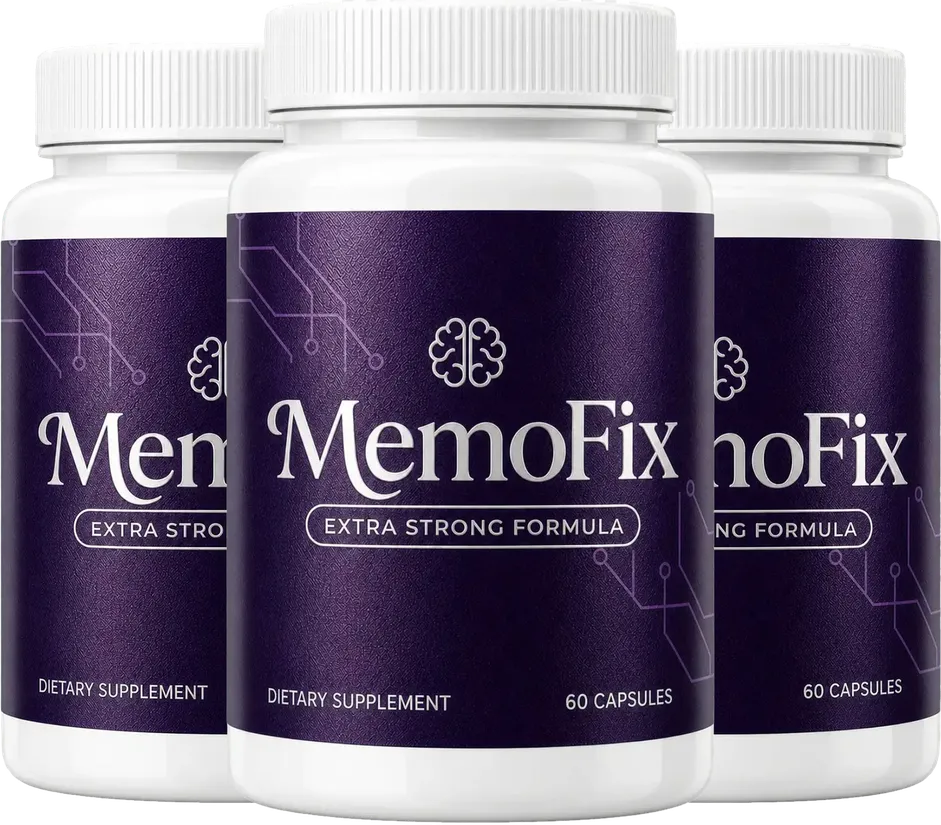
Search interest in Alpha Brain runs to roughly 27,000 queries a month, which makes it one of the best-known nootropics on the market and a natural benchmark for anyone shopping the category. This is an honest, label-first comparison of Alpha Brain against MemoFix. We will not pretend Alpha Brain is a bad product — it is a legitimate, popular formula with a serious following. But we will be direct about its one structural weakness: a proprietary blend that hides how much of each ingredient you are actually getting. That single design choice shapes almost everything about how the two compare, and it is where MemoFix draws a clear line.
Throughout, we keep to cognitive-support language. Neither Alpha Brain nor MemoFix treats, cures or prevents any disease, and nothing here is medical advice. What we can compare fairly is what each label tells you — and, just as importantly, what each label hides.
What Alpha Brain actually contains
Alpha Brain is organised into three proprietary blends — commonly branded as a “Flow” blend, a “Focus” blend and a “Fuel” blend. Inside those blends sit ingredients that any nootropic shopper will recognise, including bacopa monnieri, alpha-GPC (a choline source), huperzia serrata (the source of huperzine A), L-theanine, L-tyrosine, oat straw, cat's claw and phosphatidylserine, among others. On paper this is a thoughtfully chosen line-up; several of these ingredients have genuine cognitive research behind them.
The catch is in the format. Because these ingredients are grouped into proprietary blends, the label shows the total weight of each blend rather than the amount of each ingredient inside it. You can see, for example, that a blend weighs a certain number of milligrams, but not how much of that is bacopa versus alpha-GPC versus oat straw. A couple of standalone ingredients may carry a specific figure, but the actives that most shoppers care about are folded into the blend totals.
Why a proprietary blend makes results hard to verify
This is the crux of the whole comparison, so it is worth slowing down on. A proprietary blend is a legal, common industry practice, and brands often defend it as protecting a “secret recipe.” From a buyer's point of view, though, it creates a real problem: you cannot confirm that any single ingredient reaches the dose used in research.
Take bacopa, the most-studied botanical for memory specifically. Trials commonly use around 300 mg of a standardised extract per day, and the memory benefit builds over eight to twelve weeks. If bacopa is sitting inside a proprietary blend, you have no way to know whether you are getting a research-relevant amount or a token sprinkle added mainly so the ingredient can be named on the label. The ingredient is present; the effective dose is a guess. And a guess is a poor foundation for a supplement you plan to take daily for months.
The same logic applies to alpha-GPC, L-theanine and the rest. Each has a studied range, and a blend total tells you nothing about whether any one of them lands in it. This is not a claim that Alpha Brain under-doses anything — it is simply that the format makes the question unanswerable, which is a disadvantage in itself. If you want the deeper background on why an extract weight without a strength is only half the story, our companion piece on reading a 2026 ranking of the best brain supplements by transparency walks through the exact test.
What MemoFix contains — every dose printed
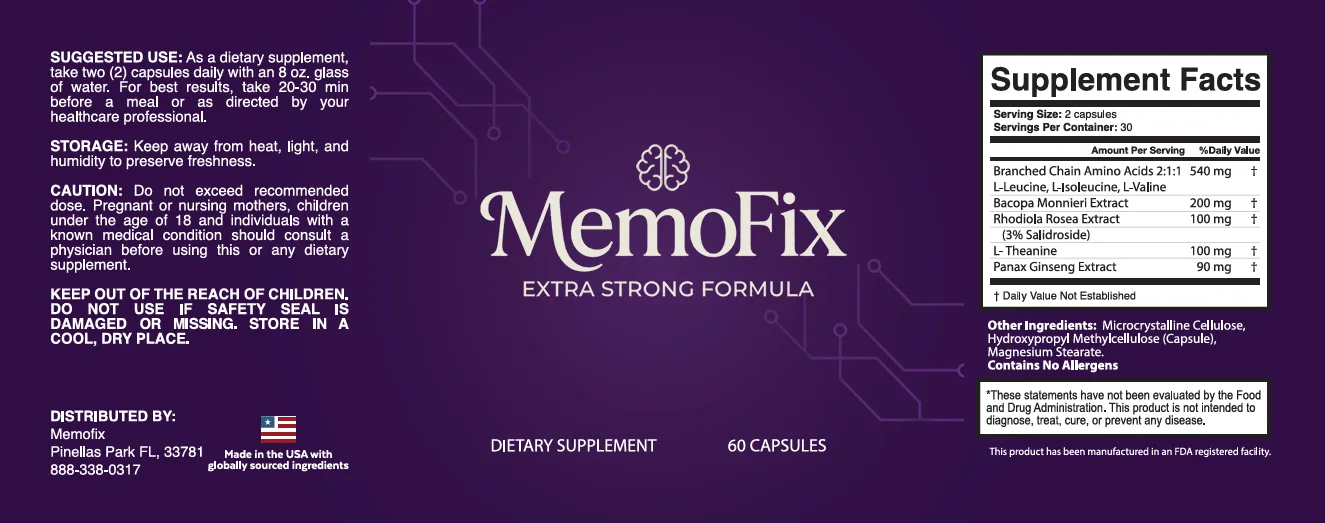
MemoFix takes the opposite approach to the blend. Two capsules a day, sixty capsules per bottle, and every active carries its own printed amount:
- Bacopa monnieri extract, 200 mg — the memory-specific botanical, shown as a real number you can weigh against the research.
- Rhodiola rosea extract, 100 mg (standardised to 3% salidroside) — the one active here with a printed strength, not just a weight.
- L-theanine, 100 mg — in the studied range for calm, non-jittery focus.
- Panax ginseng extract, 90 mg — a traditional adaptogen for alertness and mental performance.
- Branched-chain amino acids 2:1:1, 540 mg — supporting aminos completing the stack.
And the honest note we make everywhere: MemoFix's bacopa is 200 mg, below the roughly 300 mg many memory trials use. But notice what just happened — you can read that sentence, because the number is printed. With Alpha Brain's blend, the equivalent sentence cannot even be written, because the bacopa amount is not disclosed. That is the entire advantage of an open label in one comparison: not that every dose is maximal, but that every dose is visible enough to judge. For the full active-by-active verdict, our evidence-based review of whether MemoFix really works checks each amount against its studied range.
Prefer a nootropic with no hidden doses?
MemoFix prints an amount for all five actives instead of hiding them in a blend — and backs the bottle with a 60-day money-back guarantee.
Check MemoFix Pricing at the Official StoreAlpha Brain vs MemoFix on the ingredients that overlap
Both formulas include bacopa and L-theanine, so those overlaps are the fairest place to compare. With MemoFix, you know the bacopa is 200 mg and the L-theanine is 100 mg — numbers you can hold against the research (about 300 mg and 100–200 mg respectively). With Alpha Brain, those same two ingredients are inside blends, so the honest answer to “how much bacopa am I getting?” is “unknown.” Where the formulas differ most is philosophy: Alpha Brain reaches wider, including choline and huperzine-family ingredients that MemoFix leaves out, while MemoFix trades that breadth for the ability to see and verify each dose. Wider list, hidden amounts, versus a tighter list with visible amounts. That is the real fork in the road.
Common objections, answered honestly
“Alpha Brain has more ingredients, so it must be stronger.” A longer ingredient list is not the same as a stronger formula. Without per-ingredient doses, more names can simply mean each active is spread thinner across a fixed blend weight. Count effective doses, not ingredient names — and you can only count what the label prints.
“Alpha Brain is clinically studied, so the blend must be right.” Some studies have been run on the finished Alpha Brain product, which is more than most nootropics can say and is a genuine point in its favour. But a study on the whole blend still does not tell you, the shopper, how much of any individual ingredient you are swallowing, or let you compare that amount to the wider ingredient literature. Product-level research and per-ingredient transparency are two different things, and only the second helps you verify the label in your hand.
“Proprietary blends protect a valuable recipe.” Perhaps — but that protection is for the brand, not the buyer. From your side of the counter, the blend removes information you would use to make a good decision. A formula confident in its dosing does not need to hide the numbers, which is exactly why an open panel is worth rewarding.
Alpha Brain vs MemoFix on price and value
Compare cost the way you should compare any supplement: by the daily serving, not the number on the front of the box. Alpha Brain typically sits at a premium price point, in line with its brand profile and marketing reach, and its per-serving cost tends to land toward the higher end of the nootropic aisle. MemoFix starts from $49 a bottle for a 30-day supply, with the per-bottle cost dropping on its multi-bottle bundles, which is standard for direct-to-store pricing. Because promotions and subscription discounts change often on both sides, treat any figure here as directional and confirm the current number at each official store before you decide.
The more important value question is not which one costs a few dollars less, but which one lets you know what your money bought. With a proprietary blend, you are paying a premium for a formula whose individual doses you cannot see; with a fully printed label, every dollar maps to a number you can verify. That is a different kind of value — the value of information — and it is reinforced by the return window. A long, no-questions money-back guarantee matters more than any testimonial, because it gives a slow-building memory ingredient like bacopa the eight to twelve weeks it needs to show anything. MemoFix's 60-day guarantee is built for exactly that timeline.
How to run a fair trial of either formula
Whichever way you lean, test it properly or you will never get a clean answer. Pick one formula at a time — stacking two multi-ingredient nootropics muddies the result and can double up on shared actives such as bacopa or L-theanine. Take it at the same time each day, ideally with food, and keep the rest of your routine steady so the supplement is the only thing that changed. Give it a full eight to twelve weeks before you judge memory, because the recall-specific ingredient works slowly, and keep a simple note of how your focus and recall feel week to week rather than relying on memory to judge your memory. If you take medication, are pregnant or nursing, or manage a health condition, clear any new supplement with a healthcare professional first. Run that clean trial and your own results become the review that counts — which is far more reliable than a proprietary blend's reputation or a comment section's star rating.
Which should you choose?
If you are drawn to Alpha Brain's wider ingredient list and its history of product-level study, and you are comfortable not knowing each individual dose, it remains a coherent choice with a loyal following. If, on the other hand, you want to verify what you take — to see the bacopa number, weigh it against the research and judge the formula on evidence rather than reputation — then a fully printed label like MemoFix is the more honest fit. For a broader view of how proprietary blends compare with itemised labels across the whole category, our tested and ranked best brain supplements for 2026 puts many of the big names through the same transparency test used here. And whichever you pick, remember it is cognitive support layered on top of sleep, movement and diet — not a replacement for them.
Choose a formula you can actually verify
See MemoFix's current official-store pricing, check every printed dose against this comparison, and use the full 60-day window to judge it on your own results.
Order MemoFix From the Official StoreFrequently asked questions
Is MemoFix a good alternative to Alpha Brain?
For shoppers who want to see what they are taking, yes. Alpha Brain is a well-known nootropic, but it groups most of its actives into proprietary blends, so you cannot see the amount of each ingredient. MemoFix prints an individual dose for all five of its actives and a standardisation on its rhodiola, which makes it easier to match the formula to the research. Both are cognitive-support supplements, not treatments.
Does Alpha Brain disclose its ingredient doses?
Only partially. Alpha Brain lists its ingredients and the total weight of each proprietary blend, but it does not print the individual amount of most actives inside those blends, such as bacopa or alpha-GPC. A few standalone ingredients may show a specific figure, but the core blend doses are grouped, which makes it hard to verify whether any single ingredient reaches its studied amount.
Which is better for memory, Alpha Brain or MemoFix?
For memory specifically, the deciding factor is whether the memory ingredient is dosed at a studied level, and that is exactly what a proprietary blend hides. MemoFix prints its bacopa monnieri at 200 mg so you can weigh it against the research, whereas Alpha Brain's bacopa amount is folded into a blend total. Neither product treats memory loss; both offer cognitive support, and a printed dose simply makes the comparison possible.
Are Alpha Brain and MemoFix safe to take together?
Stacking two multi-ingredient nootropics can double up on shared actives such as bacopa or L-theanine, and because Alpha Brain uses a proprietary blend you cannot easily total the combined amounts. For that reason it is safer to run one formula at a time, and to speak with a healthcare professional before combining supplements, especially if you take medication or manage a health condition.