How Long Do Nootropics Take to Work?
How long do nootropics take to work?
Nootropics work on two clocks. Stimulant-style blends like caffeine with L-theanine can be felt within 20 to 60 minutes, while memory botanicals such as bacopa monnieri build gradually over 8 to 12 weeks of daily use. Same-day effects are real; the deeper memory benefits reward consistency, not a single dose.
- Fast (minutes to an hour): caffeine, L-theanine, and the two paired together for calm focus.
- Medium (weeks): citicoline, rhodiola and ginkgo, which build over roughly one to six weeks.
- Slow (months): bacopa around 8–12 weeks and lion’s mane up to 16 weeks — daily use is essential.

How long do nootropics take to work? It is the first question almost everyone asks after their first bottle arrives — and the honest answer is the one the marketing rarely gives you: it depends entirely on the ingredient. Some nootropics change how you feel inside the hour. Others quietly rebuild your memory over the better part of a season, and give you nothing dramatic to feel on day one. Confusing the two is the single biggest reason people quit a formula that was actually working, ask for a refund at week two, and conclude that “nootropics don’t do anything.”
This guide fixes the expectation gap. We will walk through a full onset timeline — from the twenty-minute effects to the sixteen-week ones — explain why fast and slow nootropics run on completely different biology, and show you how to tell whether a formula is working or whether you simply haven’t given it long enough. Because MemoFix combines both fast and slow ingredients in one capsule, it is a useful worked example throughout, and we will be specific about what you should and should not expect to feel from it, and when.
The nootropic onset timeline: from minutes to months
Here is the map. Print it, screenshot it, keep it on your phone — because the biggest mistake in this category is measuring a slow ingredient on a fast ingredient’s stopwatch. The table below sorts the most common nootropics by roughly how long they take to work, based on how the ingredients are typically studied and used.
| Nootropic | Type | Typical onset | What to expect |
|---|---|---|---|
| Caffeine | Stimulant | 30–60 minutes | Fast alertness; tolerance builds with daily use |
| L-theanine + caffeine | Amino acid + stimulant | 20–60 minutes | Calm, non-jittery focus felt the same session |
| L-theanine (alone) | Amino acid | 30–60 minutes | Relaxed alertness, takes the edge off |
| Rhodiola rosea | Adaptogen | Same day, builds over 1–2 weeks | Anti-fatigue; an acute lift that deepens |
| Citicoline (CDP-choline) | Choline source | ~1–4 weeks | Attention and memory support, gradual |
| Panax ginseng | Adaptogen | Days to a few weeks | Energy and mental fatigue support |
| Ginkgo biloba | Botanical | 4–6 weeks | Circulation-linked; needs consistent dosing |
| Bacopa monnieri | Botanical | 8–12 weeks | Memory build; daily use is non-negotiable |
| Lion’s mane | Mushroom | Up to 16 weeks | Slow neurotrophic support over months |
Notice the shape of it. The stimulants and amino acids sit at the top, measured in minutes. The choline sources and adaptogens sit in the middle, measured in weeks. And the true memory botanicals sit at the bottom, measured in months. A single product can pull from all three bands at once, which is exactly why your experience of it changes over time rather than arriving all at once.
Fast nootropics: what you can feel in the first hour
The fast lane is dominated by two things: caffeine and L-theanine. Caffeine you already know — it typically reaches peak blood levels in the 30 to 60 minute range and blocks the adenosine that makes you feel tired. On its own it can feel jittery, and its effect fades as tolerance builds with daily use.
L-theanine is the more interesting half of the pair. It is an amino acid from tea, studied around 100 to 200 mg, and it produces a calm, focused alertness within roughly 20 to 60 minutes. Paired with caffeine, it smooths out the spikiness and gives you the clean, non-jittery concentration that has made the caffeine-plus-L-theanine stack the most reliable same-day nootropic effect there is. If you take a formula containing L-theanine and feel a subtle settling of mental noise the same afternoon, that is not placebo — that is the fast band doing exactly what it does.
This matters for expectation-setting. MemoFix contains 100 mg of L-theanine alongside 100 mg of standardised rhodiola, both of which sit in the fast-to-medium range. So some people do notice a smoother, steadier focus fairly early. What you should not do is treat that early feeling — or its absence — as the final verdict, because the ingredient doing the heavy lifting for memory is running on a much slower clock.
Why slow nootropics take weeks — and why that’s a good sign
Here is the part that trips people up. Bacopa monnieri does not work like caffeine. It does not plug into a receptor, spike, and wear off. Instead, the memory botanicals appear to work through gradual, cumulative changes — supporting neurotransmitter systems, blood flow, or nerve-growth factors — that only matter once they reach a steady level in your body and brain. Building that steady state takes weeks of uninterrupted daily dosing. There is no shortcut and no loading dose that safely compresses it.
That is why bacopa trials generally report their clearest memory benefits around the 8 to 12 week mark, and why lion’s mane research can run up to 16 weeks. Far from being a red flag, a slow onset is a feature: it is the signature of an ingredient that is changing something structural rather than just borrowing energy from tomorrow the way a stimulant does. The trade-off is that it demands patience and consistency, which is precisely where most users fail the ingredient rather than the other way round.
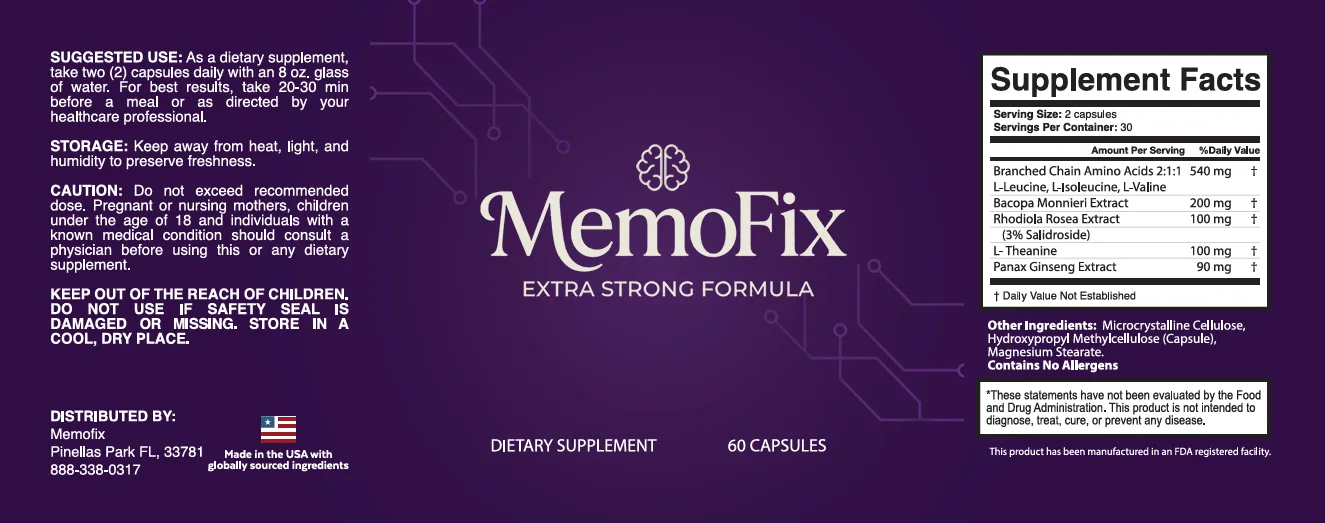
If you want to understand why the amount printed next to each of those ingredients decides whether the slow build ever amounts to anything, our companion explainer on citicoline for memory and focus walks through how a medium-onset ingredient reaches its effective dose over the first few weeks. And for the slowest ingredient of all, our overview of lion’s mane mushroom benefits explains why a sixteen-week horizon is normal rather than a sign that nothing is happening.
Why consistency beats dose size
If there is one behaviour that determines whether a slow nootropic works for you, it is not how much you take — it is how rarely you miss a day. Because the effect depends on holding a steady level, a person who takes a modest, label-accurate dose every single morning will almost always out-perform a person who takes a big dose sporadically and skips half the week. Doubling up after a missed day does not “catch up” the steady state; it just wastes product and, with some ingredients, invites side effects.
This is why the practical advice for any memory formula is boringly simple: attach it to an existing daily habit — morning coffee, breakfast, brushing your teeth — so you physically cannot forget, and then leave it running for a full two to three months before you judge it. Two capsules a day of MemoFix, taken at 60 capsules a bottle, is designed to be a one-month rhythm precisely because a single bottle is not a fair test of the bacopa inside it. Plan on the multi-bottle horizon from the start, not because it sells more bottles, but because that is the timeframe the science of the slow ingredients actually requires.

Give a memory nootropic a fair trial
MemoFix pairs fast-acting L-theanine and rhodiola with slow-building bacopa and ginseng, and backs it with a 60-day money-back guarantee — a window long enough to actually judge the slow ingredients.
See Today’s Price at the Official StoreThree myths about nootropic timelines
Myth 1: “I felt nothing on day one, so it doesn’t work.” This is the costliest misunderstanding in the whole category. Day-one is only a fair test of the fast band — the caffeine and L-theanine effects. The memory ingredients you actually bought the formula for haven’t even started to accumulate yet. Judging bacopa after one dose is like judging a savings account after one deposit.
Myth 2: “If it takes weeks, it must just be placebo.” The opposite is closer to the truth. A slow, dose-dependent, consistency-dependent onset is the fingerprint of a real physiological process, not a sugar pill. Placebo effects tend to be immediate and to fade; the multi-week build of a standardised botanical behaves nothing like that. Slow is evidence of mechanism, not the lack of one.
Myth 3: “I’ll just take more to speed it up.” Taking more than the label serving rarely shortens the timeline for a cumulative ingredient, because the limiting factor is time-at-steady-level, not peak dose. What extra capsules can do is raise your risk of stomach upset and other avoidable side effects, and empty your bottle before the trial is even complete. Consistency at the studied dose beats heroic dosing every time.
How to track whether your nootropic is actually working
Because the slow effects are subtle and gradual, they are surprisingly easy to miss while living inside them. The fix is to measure instead of relying on memory. Before you start, jot down two or three concrete markers you care about — how often you lose your train of thought in meetings, how easily you recall names, how quickly you get into focused work in the morning. Rate them honestly on day one, then again at weeks four, eight and twelve.
This turns a vague “I’m not sure it’s doing anything” into a real before-and-after you can trust. It also protects you against the reverse error — convincing yourself something works when it doesn’t — because your week-one notes are honest in a way your week-twelve memory is not. If you want to see how this plays out ingredient by ingredient against printed doses, our full MemoFix review breaks the timeline down and sets realistic milestones for each active in the formula.
Setting realistic expectations before you buy
Put it all together and the buying rule writes itself. If you want an instant hit, a caffeine-and-L-theanine product will oblige within the hour, but that is a focus tool, not a memory strategy. If you want the deeper memory and clarity benefits that the category is really sold on, you are signing up for a two-to-three-month project, and the most important features become the daily habit that keeps you consistent and a guarantee window long enough to cover the trial.
That last point is worth underlining. A 30-day return policy is almost a trap for a memory supplement, because it expires before the slow ingredients have had their say. A 60-day money-back guarantee, like the one behind MemoFix, is the minimum that lets you test a bacopa dose against your own results honestly. Choose the formula with the clearest label and the longest trial window you can find, commit to taking it daily, and give it the time the biology demands. Do that, and you will finally get a real answer to “how long do nootropics take to work?” — your own.

Ready to start your 8-to-12-week trial?
Check today’s official-store pricing on MemoFix, pick a supply that covers the full memory timeline, and put the 60-day guarantee to work while the slow ingredients build.
Order MemoFix From the Official StoreFrequently asked questions
How long do nootropics take to start working?
It depends on the ingredient. Fast-acting nootropics such as caffeine with L-theanine can be felt in roughly 20 to 60 minutes, giving you same-session focus. Slow-building memory botanicals like bacopa monnieri need daily use over 8 to 12 weeks before their full effect shows. A single formula can contain both, so you often feel a subtle lift on day one and a deeper change months later.
Why do some nootropics take weeks to work?
Slow nootropics do not act like a stimulant that plugs into a receptor for a few hours. Ingredients such as bacopa, ginkgo and lion's mane appear to work through gradual, cumulative changes — supporting neurotransmitter systems, circulation or nerve-growth factors — that need to reach a steady level in the body. That steady state is only built by taking a consistent daily dose for weeks, which is why a two-day trial tells you almost nothing.
Should I take nootropics every day for best results?
For the slow-building memory ingredients, yes — daily consistency is the single biggest factor in whether they work at all, because the effect depends on maintaining a steady level rather than on any one dose. Fast stimulant-style nootropics can be used more flexibly, and some people cycle caffeine to limit tolerance. Follow the label serving and give a memory formula a full 8 to 12 weeks before judging it.
When should I expect memory improvements from a nootropic?
Memory-focused ingredients are the slowest to show. Bacopa monnieri trials typically report clearer benefits around the 8 to 12 week mark, and lion's mane research may run up to 16 weeks. Plan to take a memory nootropic daily for at least two to three months before you decide it is or isn't helping, and use a money-back guarantee window that is long enough to cover that trial period.