Brain Health Supplements Explained: What Actually Works in 2026
What brain health supplements actually work?
The brain health supplements with the strongest evidence are citicoline and bacopa monnieri, supported by omega-3s and correcting any B12 or vitamin D deficiency. Focus actives like L-theanine and rhodiola help too. The deciding factor is not the ingredient name but whether the label prints each dose and the product is third-party tested.
- Rank ingredients by strength of human evidence, not by marketing claims.
- Insist on a printed milligram amount for every active — blends hide the doses.
- Prefer third-party-tested products; benefits are support, not disease treatment.
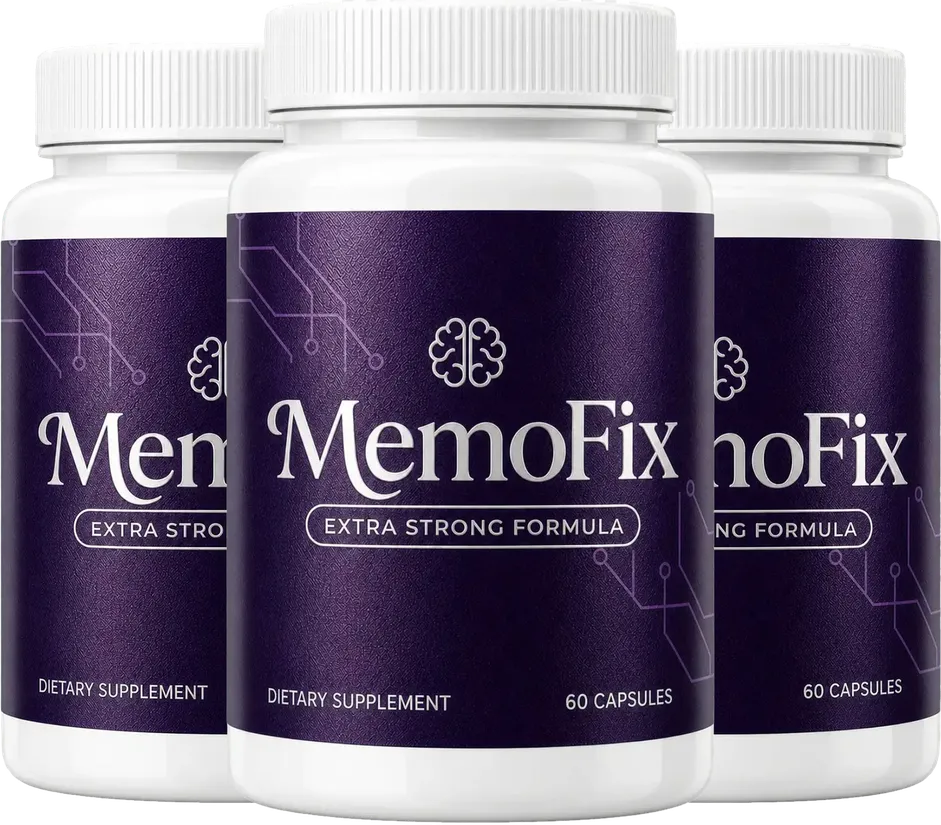
“Brain health supplements” is one of the biggest queries in the wellness world — roughly 18,100 searches a month — and also one of the most confusing aisles to shop. The category sweeps together genuinely well-studied ingredients, a handful of promising ones, and a long tail of exotic names riding on a single mouse study and a slick label. The purpose of this pillar guide is to make brain health supplements legible: to explain the main categories, rank the ingredients by how strong the human evidence really is, and give you two practical filters — dose transparency and third-party testing — that cut through almost all the noise.
One frame to carry throughout: a brain health supplement offers cognitive support, not treatment. Nothing in this category diagnoses, treats or cures a disease, and any product implying otherwise is a red flag rather than a selling point. What a good supplement can honestly do is supply well-researched ingredients, at the doses the research used, in a form you can verify. That is the whole game.
The main categories of brain health supplements
Before ranking individual ingredients, it helps to see the shelf as a few distinct groups, because they do different jobs.
Foundation nutrients are the vitamins and fats your brain needs to run: B12 and folate, vitamin D, and omega-3 fatty acids. These matter most when you are deficient, and correcting a real shortfall can do more than any exotic nootropic. We cover them in depth in the guide to vitamins for memory and focus.
Studied botanicals and nutrient-derived actives are the heart of the nootropic category: bacopa monnieri, citicoline, L-theanine, rhodiola rosea and ginseng. This is where the real, memory-specific research lives.
Emerging and lightly studied ingredients — certain mushrooms, peptides and newer compounds — are interesting but rest on thinner human evidence. They belong in the “watch this space” column, not the “proven” one.
A 6-tier evidence ranking for brain health supplements
The single most useful thing you can do when shopping is rank ingredients by strength of clinical evidence rather than by how heavily they are advertised. Here is a plain-language six-tier scale.
Tier 1 — Strong human evidence. Bacopa monnieri for memory and citicoline for attention sit here. Both have multiple human trials, standardised or well-defined forms, and researched dose ranges. If a memory formula is built around these at proper doses, it is on solid ground.
Tier 2 — Good supportive evidence. L-theanine for calm focus and omega-3 fatty acids for structural brain support. Reliable, well-tolerated, and useful as part of a stack rather than as the whole story.
Tier 3 — Moderate or context-dependent. Rhodiola rosea for mental fatigue and ginseng for cognitive stamina. Real evidence exists, but effects are more modest and depend heavily on standardisation.
Tier 4 — Deficiency-dependent. B vitamins, vitamin D and iron. These help cognition strongly when you are low and little when you are not — a test, not a guess, decides whether they belong in your regimen.
Tier 5 — Emerging. Lion’s mane and similar functional mushrooms. Promising early and animal research, growing human interest, but not yet the trial base of Tier 1. If you are curious, the deeper look at lion’s mane mushroom benefits weighs the current evidence honestly.
Tier 6 — Weak or blend-dependent. Proprietary “memory blends” that name a dozen ingredients without printing a single dose. The problem is not always the ingredients — it is that you cannot tell whether any of them are present in a meaningful amount. This tier is where most disappointment is manufactured.
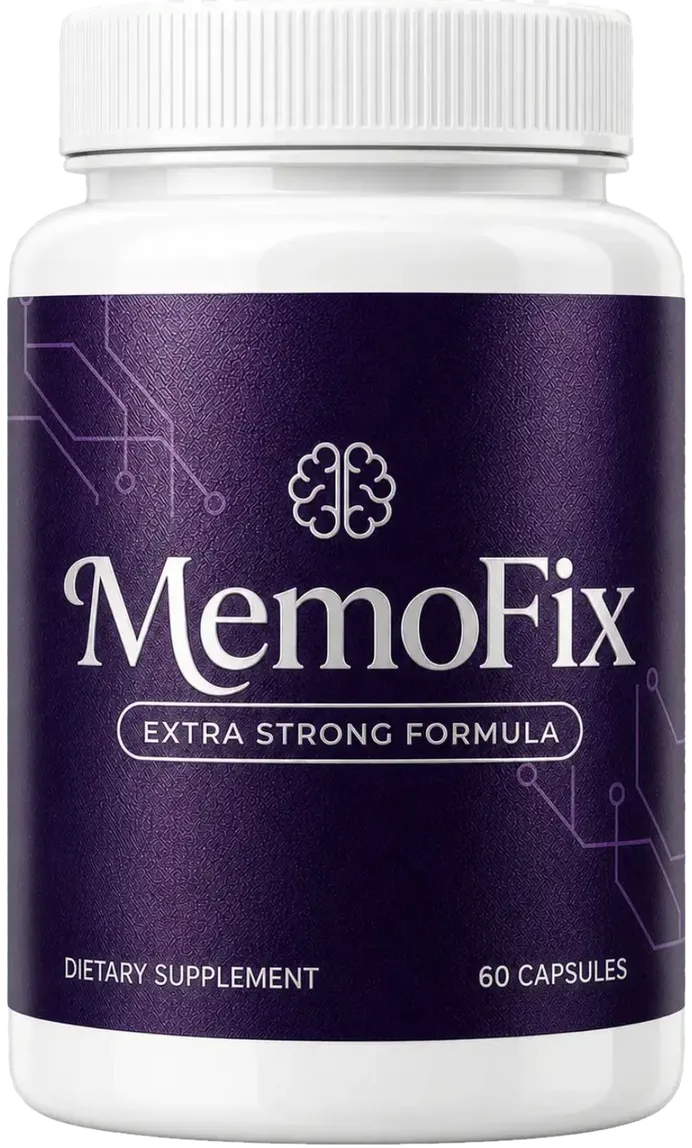
Want a formula built from the upper evidence tiers?
MemoFix pairs bacopa monnieri and L-theanine with rhodiola, ginseng and BCAAs — every amount printed, backed by a 60-day money-back guarantee.
Check MemoFix Pricing at the Official StoreThe two filters that matter most: dose transparency and testing
Once you know the tiers, two questions do most of the work of separating a good brain health supplement from a poor one.
Does the label print every dose? A formula that hides its ingredients inside one “proprietary blend” weight is asking you to trust the amounts without seeing them. A label that prints an individual milligram figure for each active lets you match it against the research — bacopa around 300 mg, citicoline 250–500 mg, L-theanine 100–200 mg. Transparency is not a nicety; it is the only way to confirm the two things that decide whether a supplement can work: that the right ingredient is present, and that it is present at a real dose.
Is it third-party tested? Because supplements are not pre-approved before sale, independent testing is the buyer’s main safeguard against contamination and under-dosing. Look for a batch or lot you can check, or certification from a recognised third-party lab. A brand confident in its formula tends to be confident about being tested.
How to shop for a brain health supplement in 2026
Put the tiers and filters together and shopping becomes a short checklist. Start with the ingredient list and ignore the front-of-pack adjectives entirely. Confirm the formula leans on Tier 1 and Tier 2 actives rather than a parade of Tier 6 exotics. Check that each of those actives carries a printed dose, then hold the key numbers against the researched ranges. Look for third-party testing. Finally, price it by the daily serving rather than the sticker on the bottle, because a transparent formula at a fair per-day cost beats a cheap blend you cannot verify. For the finished shortlist that applies exactly this method across the market, the ranked roundup of the best brain supplements of 2026 does the sorting for you.
How MemoFix maps onto the evidence tiers — honestly
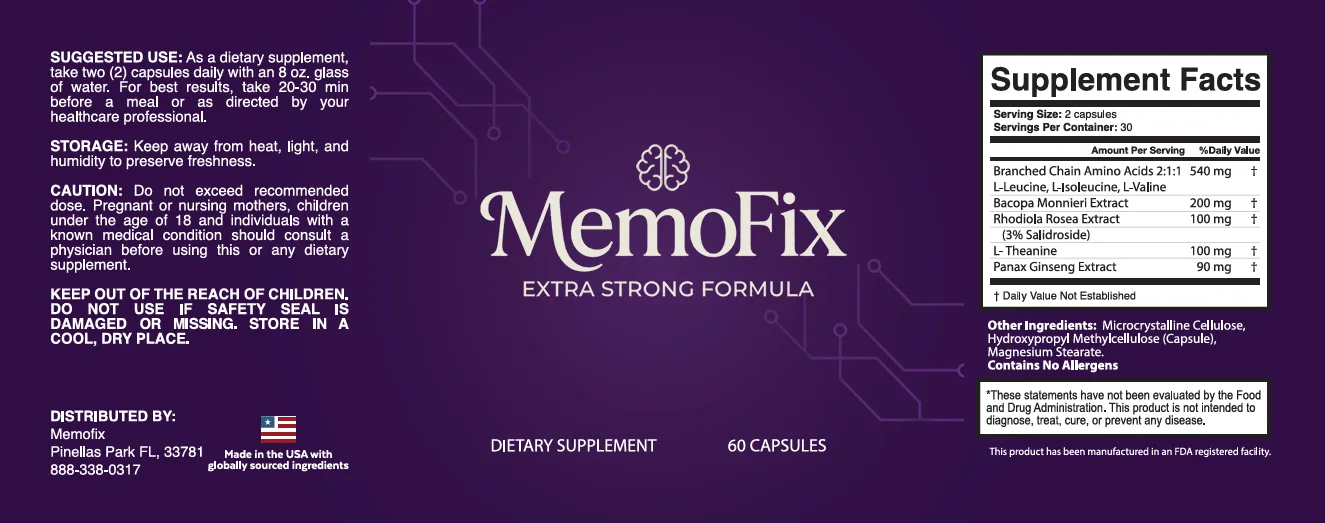
MemoFix is a useful worked example because its label passes the transparency filter that so much of the category fails. The panel prints rhodiola rosea extract (100 mg, standardised to 3% salidroside), L-theanine (100 mg), branched-chain amino acids 2:1:1 (540 mg), bacopa monnieri extract (200 mg) and panax ginseng extract (90 mg). Two capsules a day, sixty capsules per bottle, with nothing hidden inside a blend. In tier terms it is anchored by a Tier 1 memory active (bacopa) and a Tier 2 focus active (L-theanine), rounded out with Tier 3 botanicals.
The honest caveats. Its bacopa is 200 mg, below the roughly 300 mg many memory trials use — a number you can see and weigh precisely because the label is open, which is the whole advantage of a transparent panel over a blend. And it is a focus-and-recall formula, not a citicoline product, so if citicoline is your priority you would look elsewhere or stack it separately; the focused read on citicoline for memory and focus explains where that ingredient shines. For the full ingredient-by-ingredient verdict against published dose ranges, our evidence-based MemoFix review lays it all out.
Who benefits most from a brain health supplement
Brain health supplements are not one-size-fits-all, and being honest about who they help keeps expectations realistic. Adults over fifty who notice everyday recall slipping — names, where they left things, the thread of a conversation — are the group most drawn to memory-specific actives like bacopa, and it is exactly the territory bacopa has been studied in. Students and knowledge workers chasing sustained attention tend to get more from focus actives like L-theanine and citicoline, felt closer to the same day. People under chronic mental fatigue often respond to adaptogens such as rhodiola. And anyone eating a limited diet, on long-term acid-reducing medication, or short on sun exposure should look first at foundation nutrients, because correcting a real B12 or vitamin D shortfall can outperform any nootropic.
The group that benefits least is the one the category markets to hardest: healthy, well-nourished people expecting a dramatic overnight change. For them the honest gains are modest and cumulative, which is why a money-back guarantee and a two-to-three-month trial window matter more than any testimonial. Match the ingredient to your situation, give it real time, and judge it on your own results.
Common myths about brain health supplements
Myth: “More ingredients means a better supplement.” Usually the opposite. A long list often means each ingredient is present in a token amount so the label can name it. A short list of properly dosed Tier 1 and Tier 2 actives beats a kitchen-sink blend.
Myth: “Natural means it must be safe.” Natural ingredients can still interact with medication and vary wildly in quality. Safety comes from studied doses and third-party testing, not from the word “natural” on the front. If you take medication, the nootropic side effects and safety guide is worth reading before you start.
Myth: “A supplement can treat a memory condition.” It cannot, and it does not claim to. Brain health supplements offer cognitive support on top of good sleep, exercise and medical care. A diagnosed concern is a reason to see a doctor, not to reach for a stronger bottle.
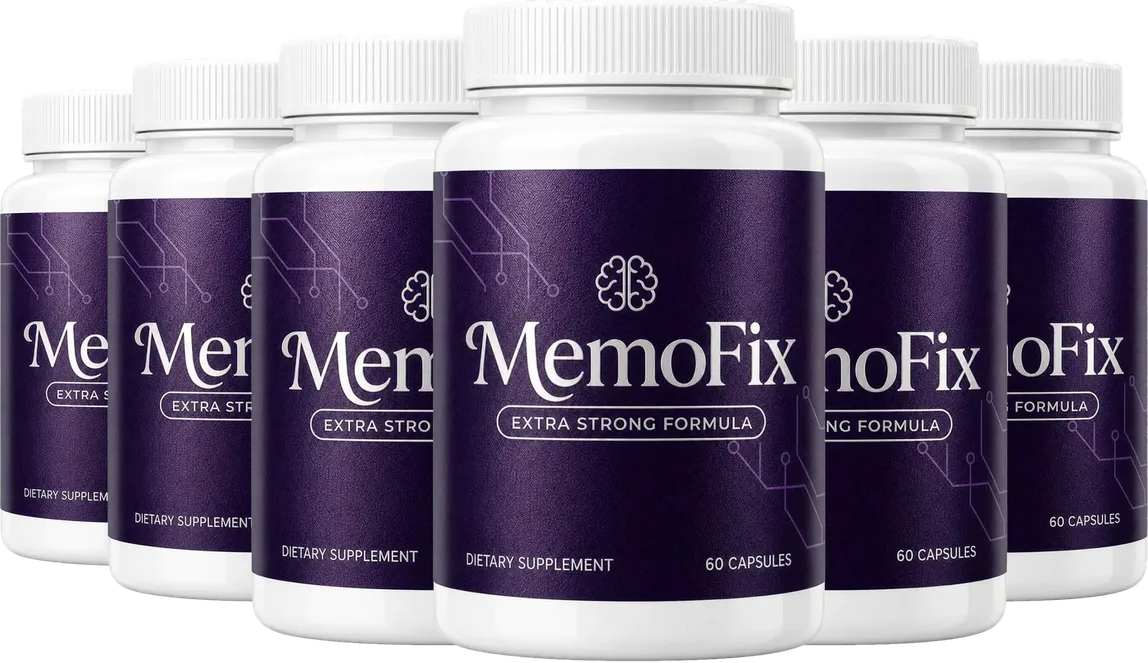
Shop the evidence, not the marketing
See MemoFix’s current official-store pricing, verify the printed doses against these tiers, and use the full 60-day window to judge it on your own results.
Order MemoFix From the Official StoreFrequently asked questions
What supplements are good for brain health?
The brain health supplements with the strongest human evidence are citicoline and bacopa monnieri, supported by omega-3 fatty acids and the correction of any B12 or vitamin D deficiency. Ingredients like L-theanine and rhodiola help with focus and mental fatigue. A short list of well-dosed, transparently labelled actives beats a long proprietary blend of exotic names almost every time.
Which brain health supplement has the best evidence?
For memory specifically, bacopa monnieri has the most substantial human research, built on standardised extracts used over eight to twelve weeks. For attention and near-term focus, citicoline is one of the best-studied, with more than twenty human trials. Both sit in the top evidence tier, and both work best when the label prints the exact dose rather than hiding it in a blend.
Are brain health supplements safe long term?
The best-studied ingredients, taken at their researched doses, are generally well tolerated for daily long-term use, and bacopa in particular has been studied over multi-month periods. Safe for most is not the same as safe for everyone. Third-party testing reduces the risk of contamination or under-dosing, and anyone on medication or with a health condition should confirm with a healthcare professional first.
Do I need a prescription for brain health supplements?
No. Brain health supplements are dietary supplements, not drugs, so they are sold without a prescription and do not claim to treat or cure any condition. That freedom is also why quality varies so widely, which makes dose transparency and third-party testing the buyer's main safeguards. If you have a diagnosed cognitive concern, see a doctor rather than relying on a supplement.