Vitamins for Memory and Focus: A 2026 Guide to What Actually Helps
Which vitamins actually help memory and focus?
The best vitamins for memory and focus are the ones correcting a shortfall: B12 and folate to manage homocysteine, and vitamin D if you are deficient. Omega-3 fats support brain-cell membranes. For fuller cognitive support, pair these vitamins with studied nootropics such as citicoline and bacopa monnieri.
- Correct a real deficiency first — a blood test beats guessing which pill to buy.
- B12, folate and vitamin D carry the strongest everyday cognitive evidence.
- When levels are fine, a transparently dosed nootropic is the more targeted next step.
Search interest in vitamins for memory is enormous — roughly 6,600 people look for that exact phrase every month, and the broader interest in memory and focus nutrition runs far higher, with “omega-3” alone drawing close to 9,900 monthly searches. That demand is a sign of how many people feel their recall slipping or their focus fraying, and how naturally we reach for the vitamin aisle when it does. This 2026 guide is about giving you an honest map: which vitamins for memory and focus actually have human evidence behind them, roughly how much to take, and the point at which a plain vitamin stops being enough and a dedicated nootropic makes more sense.
Here is the principle the rest of the guide will keep returning to: vitamins do the most for your brain when they are fixing a genuine shortage. Topping up a nutrient you already have plenty of rarely moves the needle, while correcting a real deficiency can be transformative for energy and clarity. So the smartest first move is not buying the most-hyped bottle — it is finding out what, if anything, you are actually low on.
Do vitamins for memory and focus really work?
The honest answer is: sometimes, and mostly when you are deficient. This is the single idea that separates realistic expectations from disappointment. In well-nourished people with normal blood levels, adding more of a vitamin usually produces little measurable change in memory or attention. In people who are genuinely low — and more of us are than assume we are — correcting the gap can noticeably lift concentration, mood and mental stamina.
That is why a vitamin for memory is not really a “brain booster” in the way it is often marketed. It is a repair job. The value is in identifying and closing a nutritional gap, not in stacking extra micrograms on top of an already sufficient diet. Keep that frame and the rest of the choices become clear.
The vitamins with the strongest cognitive evidence
You do not need a cabinet full of bottles. A short list of nutrients carries almost all of the real evidence for memory and focus. Here they are, with typical doses and the honest caveats.
B vitamins — B12 and folate for homocysteine
The B vitamins earn their reputation mainly through B12 (cobalamin) and folate (B9). Both help the body keep homocysteine — an amino acid that rises when these vitamins run low — within a healthy range, and elevated homocysteine has been linked in research to poorer cognitive ageing. B12 deficiency in particular is a well-recognised, and often missed, cause of fatigue, low concentration and the foggy feeling so many people describe. It is more common in older adults, in people on long-term acid-reducing medication, and in those eating little or no animal food.
Typical supplemental amounts sit far above the bare daily requirement precisely because absorption drops with age: many B-complex or memory products use several hundred micrograms of B12 and around 400 micrograms of folate. The catch worth stating plainly is that B vitamins reliably help cognition when you are low; if your levels are already fine, extra Bs mostly end up in your urine.
Vitamin D — the deficiency almost nobody checks
Vitamin D is unusual because deficiency is genuinely widespread, especially in northern climates, in people who spend most of the day indoors, and in those with darker skin. Low vitamin D status has been associated in observational research with worse cognitive performance, and while supplementing will not turn a well-stocked brain into a sharper one, restoring a deficient level can help with the low mood and mental sluggishness that often travel with it.
Because vitamin D is fat-soluble and can accumulate, this is the one nutrient where a test genuinely matters before you dose. Many adults who supplement use somewhere in the region of 1,000–2,000 IU a day for maintenance, but the right amount depends entirely on your starting level — another reason a simple blood test beats guesswork.
Omega-3 fatty acids — technically a fat, not a vitamin
Omega-3s get grouped with “vitamins for memory” in everyday searches even though they are fats, and their popularity is no accident: interest in omega-3 runs to roughly 9,900 searches a month. The two that matter for the brain are EPA and DHA, the latter a major structural component of brain-cell membranes. The research is strongest for supporting overall brain and cardiovascular health and mood rather than for dramatic memory gains in healthy adults, but as a foundation nutrient it is one of the better-supported choices. If you want the fuller picture on dosing and food-versus-capsule sources, our dedicated explainer on omega-3 for brain health goes deeper than there is room for here. Typical fish-oil doses aim for a combined EPA plus DHA figure of around 1,000 mg a day.
Covered the vitamins — want targeted focus support too?
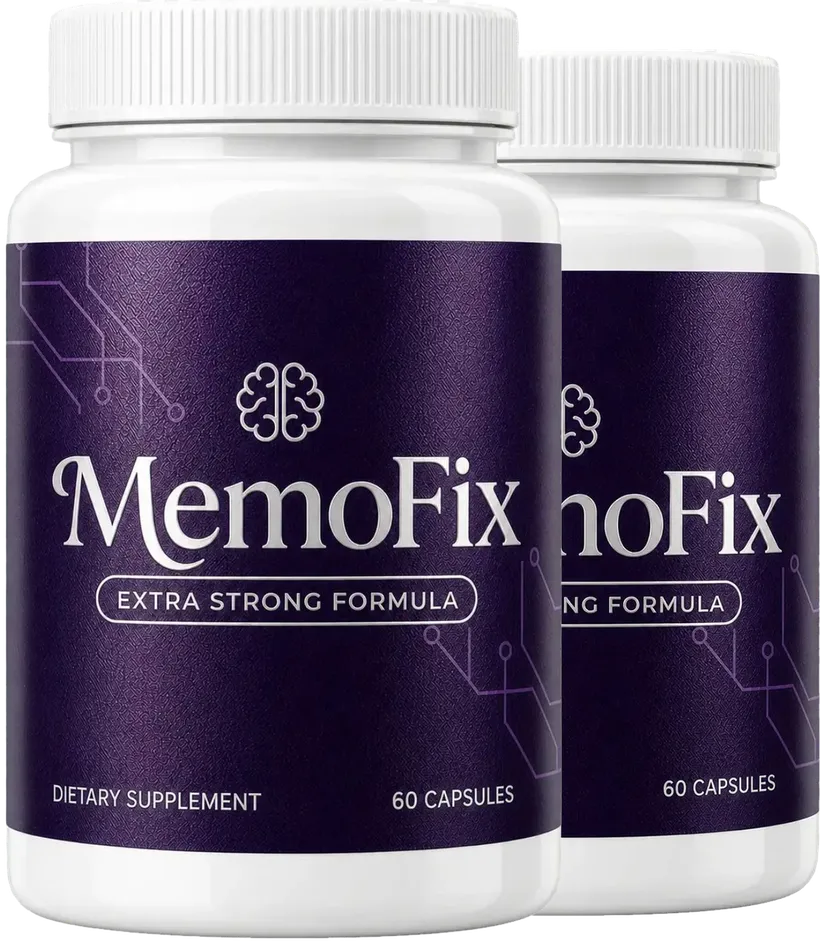
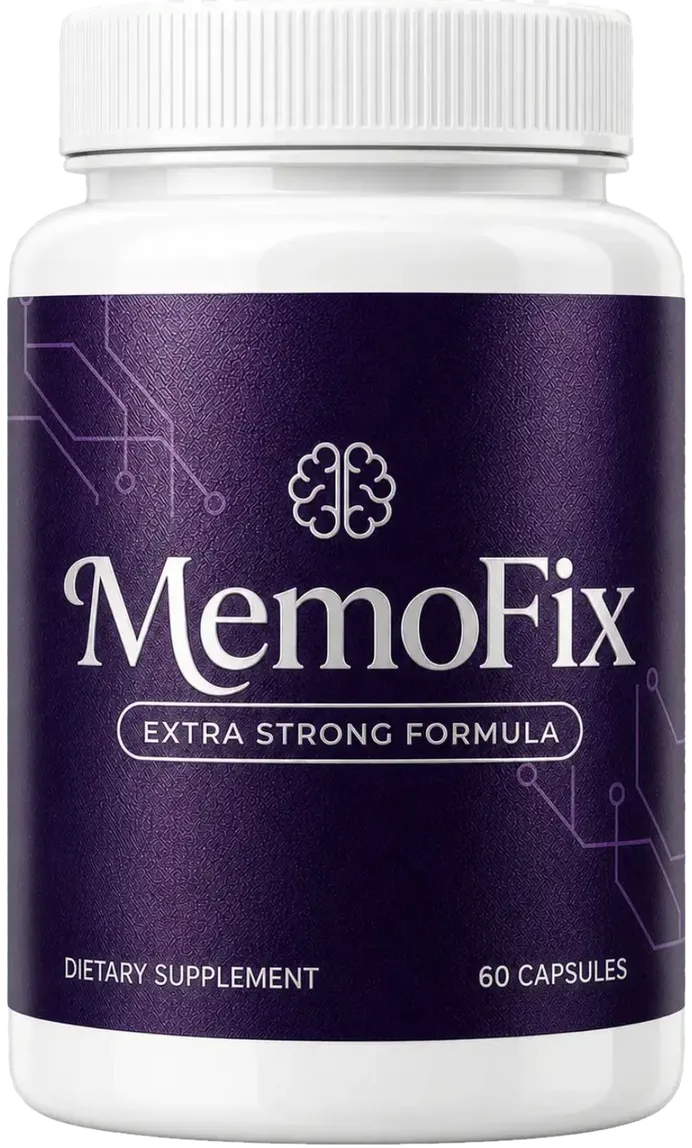
MemoFix pairs bacopa monnieri and L-theanine with three more actives, every amount printed on the label and backed by a 60-day money-back guarantee.
Check MemoFix Pricing at the Official StoreWhere vitamins stop and nootropics begin
Vitamins are foundational, but they are not aimed at memory the way certain plant and nutrient-derived actives are. Once your B12, folate and vitamin D are in a healthy range, adding more of them does little, and this is exactly the point where nootropic ingredients become the more logical next step. Two are worth knowing by name.
Citicoline (CDP-choline) is one of the better-studied cognitive ingredients, with more than twenty human trials examining attention and memory, generally in the 250–500 mg range. Unlike a vitamin, it is studied specifically for near-term attention support. If you want to see how quickly it tends to act, the focused read on citicoline for memory and focus lays out the timelines.
Bacopa monnieri has the most substantial human evidence for memory in particular, as opposed to alertness, but it is a slow builder: the benefit accrues over eight to twelve weeks of daily use, and trials commonly use around 300 mg of a standardised extract. Bacopa is where the “vitamin” mindset can trip people up — you cannot judge it in a week. For a wider view of how these ingredients rank against one another, the guide to brain health supplements and their evidence tiers is a useful companion.
Vitamins vs a full nootropic formula — how to decide
The decision is less either/or than most marketing implies. Think of it as a two-step sequence. Step one: rule out a deficiency. If a blood test shows you are low in B12, folate or vitamin D, correct that first, because no nootropic will out-perform simply fixing a genuine shortage. Step two: if your levels are fine but you still want support for focus and recall, a transparently dosed nootropic that combines several studied actives is the more targeted tool than yet another single vitamin.
Many people, sensibly, use both — a foundation of corrected vitamins plus a memory formula on top. What matters is not the label on the front but whether you can read a real amount for every ingredient on the back, which brings us to the honest worked example.
How MemoFix fits — and where it does not
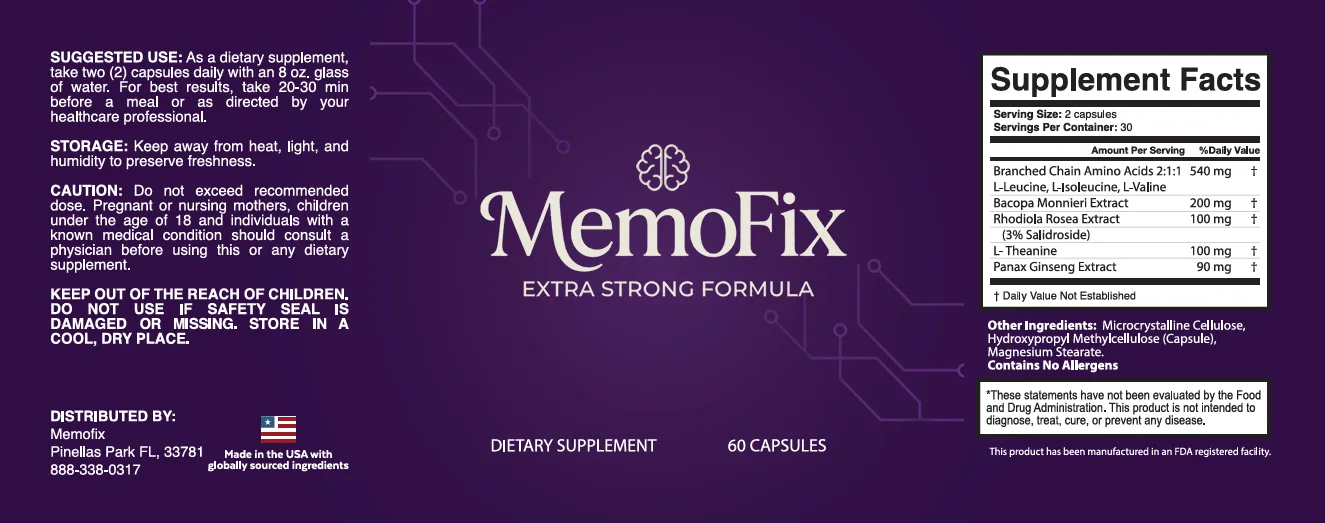
MemoFix is a useful example of the “nootropic” end of this decision because its label passes the transparency test that so much of the category fails. The panel prints rhodiola rosea extract (100 mg, standardised to 3% salidroside), L-theanine (100 mg), branched-chain amino acids 2:1:1 (540 mg), bacopa monnieri extract (200 mg) and panax ginseng extract (90 mg). Two capsules a day, sixty capsules per bottle. Nothing hidden inside a proprietary blend.
The honest caveats matter as much as the plus points. MemoFix is a focus-and-recall formula, not a multivitamin: it does not contain B12, vitamin D or omega-3, so it is not a substitute for correcting a diagnosed deficiency. And its bacopa is 200 mg, below the roughly 300 mg many memory trials use — a number you can see and weigh precisely because the label is open. That is the whole advantage of a transparent panel: you get to make the trade-off with real information rather than trust a blend. For the ingredient-by-ingredient verdict against published dose ranges, our evidence-based MemoFix review lays it out.
Common myths about vitamins for memory and focus
Myth: “A memory vitamin will make a healthy brain sharper.” Mostly not. The gains show up when you are correcting a deficiency, not when you are adding extra on top of adequate levels. This is the myth that sells the most bottles and delivers the least.
Myth: “More vitamins can’t hurt.” Water-soluble Bs are largely excreted, but fat-soluble vitamins like D can accumulate, and mega-doses of some nutrients carry real risks. More is not automatically safer — the right amount is.
Myth: “If a memory supplement doesn’t work in a week, it never will.” For the memory-specific ingredient, bacopa, a week is far too soon — the effect builds over two to three months. Abandoning it early is the most common reason people conclude, wrongly, that nothing helped.
How to build a simple, honest memory stack
You can put the whole guide into practice in four steps. First, get a blood test for B12, folate, vitamin D and iron before you buy anything, so you are treating a real gap rather than a guess. Second, correct any deficiency the test reveals, at a dose your doctor is comfortable with. Third, if you want broad structural support, a daily omega-3 with a meaningful combined EPA and DHA figure is one of the better-evidenced foundations. Fourth, if your vitamins are sorted and you still want targeted focus and recall support, add a transparently dosed nootropic with visible amounts of ingredients like bacopa and L-theanine, and give it the full eight to twelve weeks before judging it.
Two closing truths no supplement label prints for you. Nothing in a capsule replaces sleep, movement, and managing blood pressure and blood sugar — those do more for long-term memory than any pill. And a supplement is a support on top of those foundations, never a substitute for a medical work-up if your memory or focus has genuinely declined. If that describes you, see a professional first.
Vitamins in place — add a formula you can verify
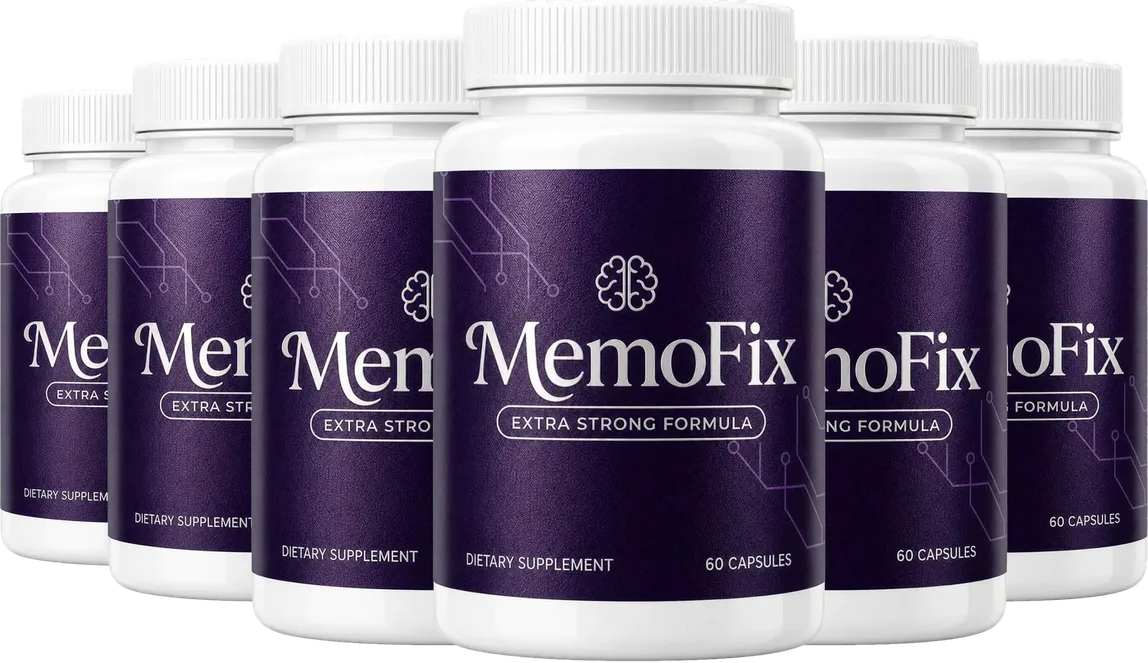
See MemoFix’s current official-store pricing, check the printed doses against this guide, and use the full 60-day window to judge it on your own results.
Order MemoFix From the Official StoreFrequently asked questions
Which vitamins are best for memory and focus?
The vitamins with the most cognitive evidence are the B vitamins B12 and folate, which help keep homocysteine in a healthy range, and vitamin D, where a genuine deficiency is linked to poorer cognition. Omega-3 fats support brain-cell membranes. These matter most when you are actually low, so correcting a shortfall does more than adding vitamins on top of an already adequate diet.
Can a vitamin deficiency cause brain fog?
Yes, a real deficiency can. Low B12 in particular is a well-recognised cause of fatigue, poor concentration and the foggy feeling many people describe, and low vitamin D and iron can contribute too. The way to know is a blood test rather than guesswork. If you have persistent brain fog, ask your doctor to check these levels before you buy anything.
Should I take a memory vitamin or a full nootropic?
A vitamin fixes a specific gap; a nootropic formula aims to support attention and recall more broadly. If a blood test shows you are low in B12 or vitamin D, correct that first. If your levels are fine but you still want cognitive support, a transparently dosed nootropic with ingredients like citicoline and bacopa monnieri is the more targeted choice. Many people use both.
How long do memory vitamins take to work?
It depends on why you took them. Correcting a clear B12 or vitamin D deficiency can lift energy and clarity within a few weeks. Ingredients aimed at memory itself, such as bacopa monnieri, generally need eight to twelve weeks of daily use before recall benefits appear in trials. Either way, consistency over months beats judging any supplement after a few days.